The story of Indian manufacturing did not begin with industrial corridors or policy schemes. It began thousands of years ago in the organised cities of the Indus Valley, where artisans mastered textile production, metallurgy, bead-making, and ceramics. Industrial capability was embedded in trade networks and craftsmanship long before modern economic frameworks were conceived.
In 2026, India once again stands at an important moment in its manufacturing journey. After periods of colonial deindustrialisation, policy rigidity, and gradual liberalisation, the country is repositioning itself as a serious global production hub. The question now is not whether India can manufacture. It is whether Indian manufacturing can compete sustainably.
However, incentives are catalysts. They are not substitutes for competitiveness.
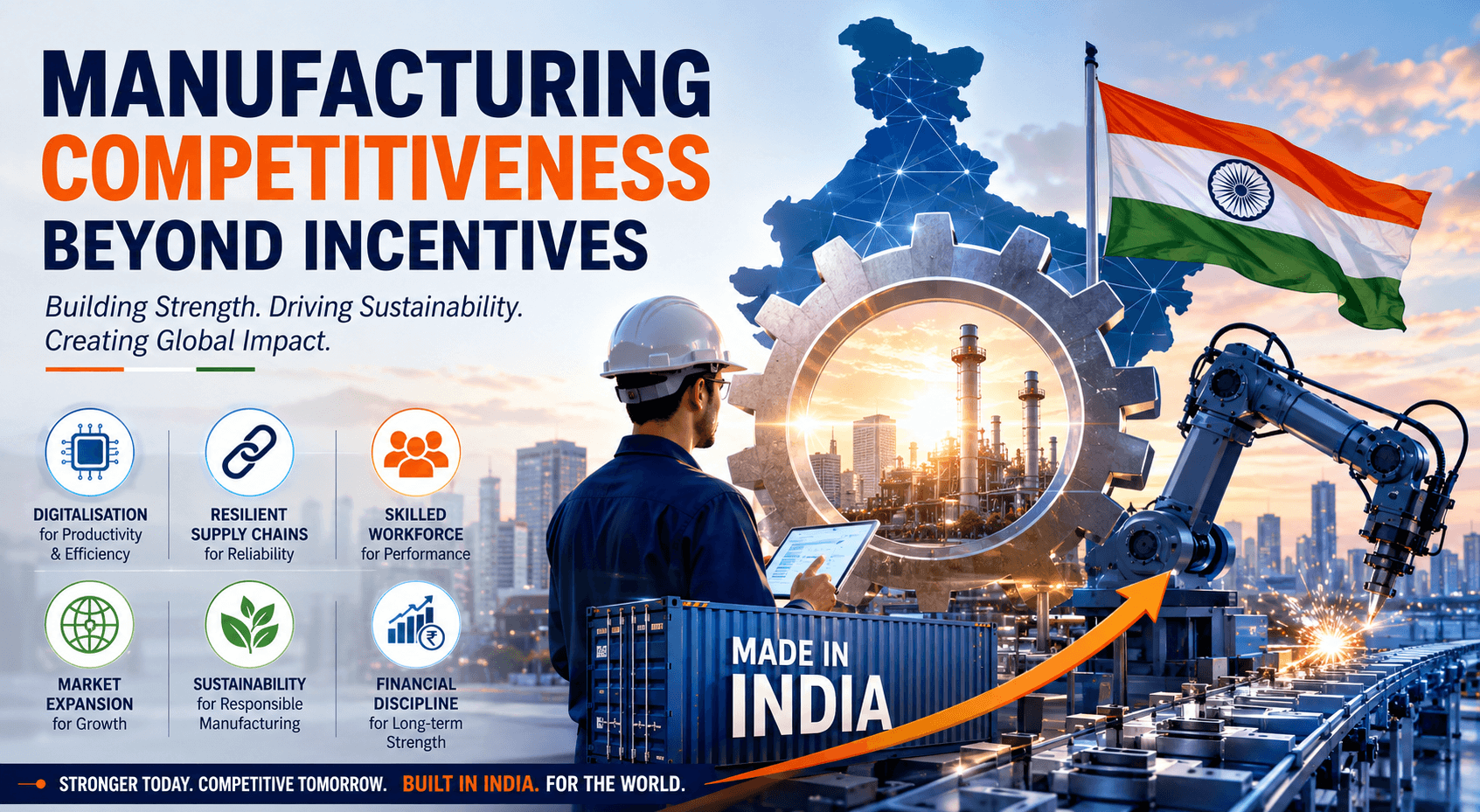
If India’s manufacturing renaissance is to endure beyond fiscal support cycles, enterprises must build strength across deeper structural pillars.
Digitalisation as Operating Discipline
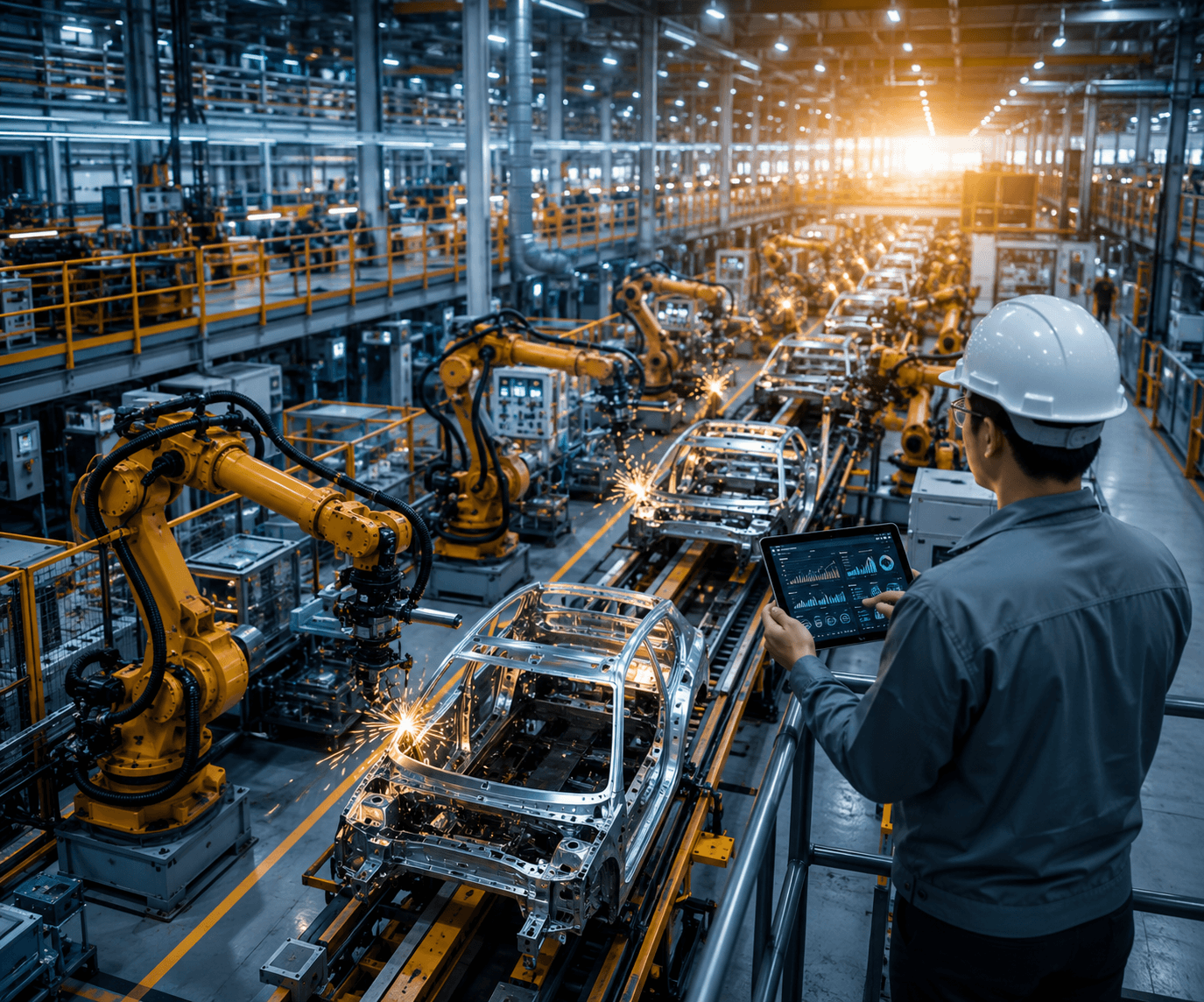
Technology adoption can no longer remain selective. Smart manufacturing systems, AI-assisted production planning, and integrated ERP platforms are becoming baseline requirements for scale. Industry studies in 2025 indicate that over 60 percent of large Indian enterprises are actively piloting AI-driven tools in operations. The competitive edge will belong to those who integrate digital systems across procurement, production, quality control, and distribution rather than treating technology as an isolated initiative.
Digital maturity improves productivity, traceability, and responsiveness. In global supply chains, these attributes matter as much as cost efficiency.
Strategic Scaling and Supply Chain Resilience
Scaling is not merely about expanding capacity. It requires strengthening vendor ecosystems, diversifying sourcing strategies, and building reliable logistics networks. Geopolitical disruptions and freight volatility over the past few years have demonstrated the fragility of concentrated supply chains.
Indian manufacturers that build resilient and collaborative supplier networks will find it easier to secure long-term global contracts. Reliability is increasingly a differentiator.
Workforce Capability and Productivity
Manufacturing competitiveness ultimately depends on people. India’s Worker Population Ratio reached approximately 52 percent in 2025, reflecting broad labour force participation. Automation is expanding, but it is augmenting rather than replacing human capability.
The real challenge lies in upskilling. Advanced machinery and digital platforms require technicians and managers who understand both process and data. Investment in training, retention, and productivity-linked performance frameworks will determine long-term operational efficiency.
Market Expansion and Diversification
India’s merchandise exports continued to show resilience through FY26, with engineering goods and electronics remaining significant contributors. Yet, export concentration remains a risk.
Manufacturers must diversify product lines and geographic markets. Participation in evolving trade agreements, including newer bilateral frameworks coming into effect in 2025, opens opportunities but also raises standards. Competing internationally requires quality assurance, compliance credibility, and consistent delivery performance.
Sustainability as Market Access
Environmental compliance is no longer an afterthought. With digital traceability tools and emerging global requirements around product transparency, sustainability is becoming central to export competitiveness.
Green manufacturing practices, energy efficiency, and responsible sourcing are increasingly prerequisites for entering advanced markets. Sustainability strengthens brand positioning while also mitigating regulatory risks.
Financial Discipline as the Anchor
Perhaps the most underestimated pillar of competitiveness is financial discipline. Manufacturing growth demands careful capital allocation, disciplined working capital management, and structured leverage of government incentives.
Incentives should strengthen balance sheets, not compensate for inefficiencies. Investment in R&D, technology upgrades, and governance systems must be backed by rigorous financial planning. In an environment of rising global competition, liquidity management and cost control are strategic capabilities.
Beyond Incentives
Manufacturing competitiveness is therefore an ecosystem outcome. It emerges from operational excellence, governance maturity, technological integration, and financial clarity. India’s historical craftsmanship demonstrates that industrial capability has long existed. Today, the opportunity is supported by policy momentum and infrastructure investment. The responsibility now shifts to enterprises.
When incentives eventually taper, the firms that endure will be those that have built systems, talent, resilience, and financial strength. That is the true measure of competitiveness.
The next phase of India’s manufacturing story will not be written only in policy announcements. It will be written in boardrooms, factory floors, and balance sheets.